Nourish qi
Warm meals, broths, congee, root vegetables and mild herbs support energy and digestion.
TCM Food connects Chinese dietary therapy, herbal knowledge and seasonal cooking. Not as a diet, but as a practical way to support qi, blood, yin, yang and digestion every day.
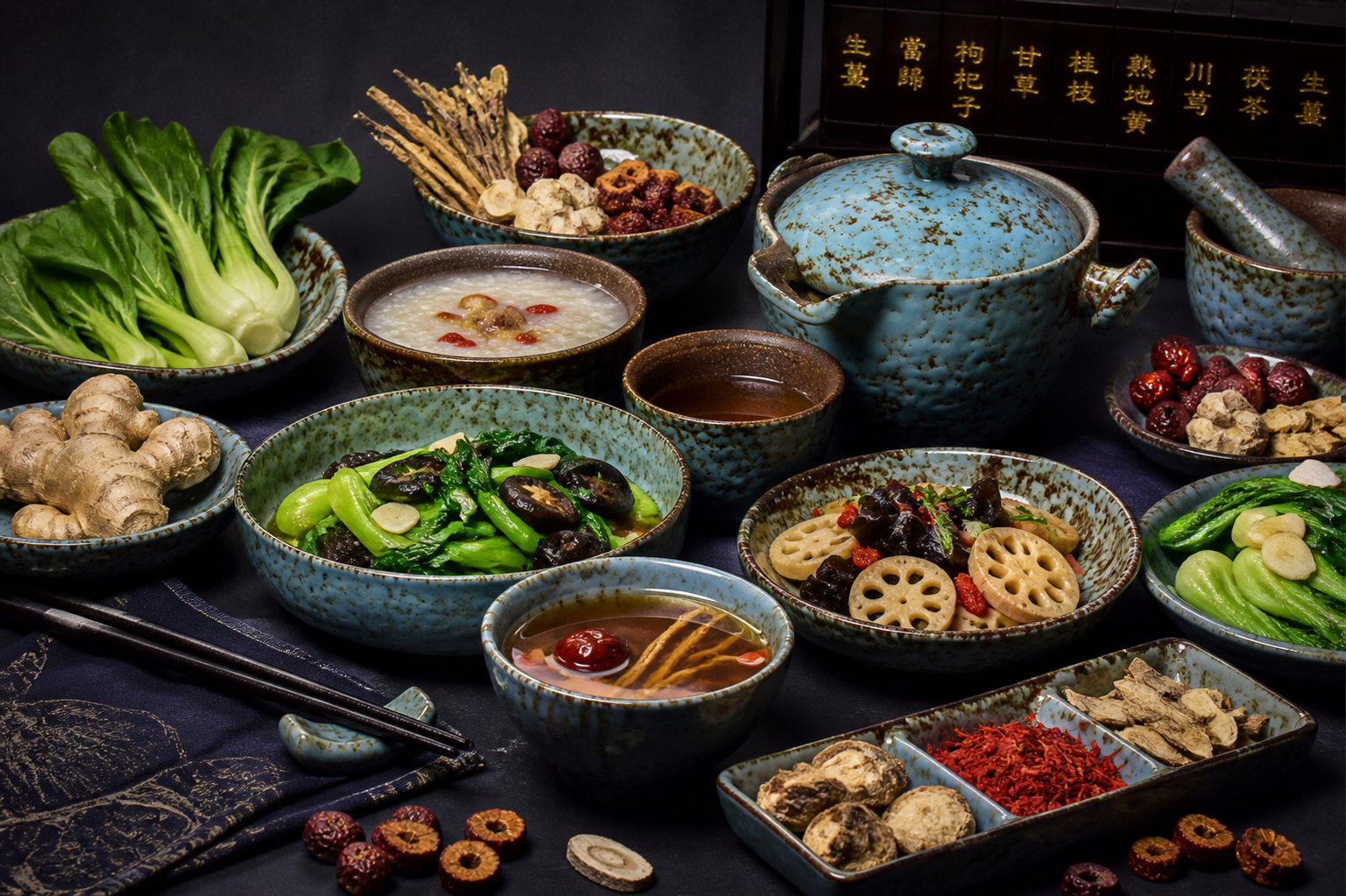
In Traditional Chinese Medicine, food is assessed by its action: warming or cooling, nourishing or draining, building or moving. Every ingredient influences the body, the organs and the balance between yin and yang.
Warm meals, broths, congee, root vegetables and mild herbs support energy and digestion.
Dark leafy greens, dates, goji, black sesame and slow-cooked dishes nourish deeper recovery.
Pear, lotus root, sesame, tofu, mung beans and gentle soups support fluids, calm and cooling.
Ginger, cinnamon, spring onion, stews and warming broths help with cold, sluggishness and fatigue.
Shí liáo is an independent discipline within Traditional Chinese Medicine. Food is used according to energetic principles, classical sources and clinical applicability.
In Western medicine, food and medication are often treated separately. In TCM, they are closely connected. Shí liáo focuses on restoring balance through daily food before complaints become chronic.
Shí liáo is not general nutrition, but a clinically applicable field within medicine. Its approach is rooted in classical sources and translates food into prevention, recovery and daily support.
Each element nourishes a specific organ system and has its own season, taste and colour.
TCM dietary therapy is not a modern interpretation of old habits. It is systematically recorded in classical works that still guide serious application today.
The Inner Canon of the Yellow Emperor describes food as a therapeutic tool and connects the five tastes with organ systems, qi, blood, body fluids and meridians.
This classical work on therapeutic food describes everyday ingredients, their thermal nature, taste, organ-directed action and use in imbalance.
The strength of Shí liáo lies in practical food: grains, vegetables, fruit, soup, tea, herbs and simple preparations with clear energetic action.
Shí liáo assesses food not only by nutritional value, but also by energetic direction and clinical applicability.
Food can be warming, cooling or neutral and is matched to internal cold, heat or deficiency.
Sour, bitter, sweet, pungent and salty each have their own action on meridians and organ systems.
Ingredients can target the lung, spleen, liver, heart, kidney or stomach and provide focused support.
Food can be used as ascending, descending, inward-drawing or outward-leading.
Each season calls for its own approach in the kitchen. Choose foods that match the energy of that moment.
Each recipe is viewed through TCM: which organs are supported, what temperature the dish has, which taste dominates and which season it suits.
A gentle, moistening meal for dry throat, dry skin and support of lung energy.
View recipe →Warming, nourishing and suitable for cold, fatigue and the need for deep rebuilding.
View recipe →Supports smooth liver qi with light green vegetables, fresh flavours and gentle preparation.
View recipe →TCM Food uses familiar kitchen ingredients and classical Chinese foods: ginger, spring onion, mung beans, lotus root, Chinese dates, goji berries, chrysanthemum, black sesame, shiitake, reishi, astragalus and rice congee.
The focus is on safe, practical and nourishing use in everyday dishes. Medicinal herbs are clearly distinguished from ordinary foods.
TCM Food is intended for everyone who wants to approach nutrition more seriously: from TCM professionals and teachers to integrative health professionals and advanced interested readers.
The knowledge base brings together classical sources, clinical cases, foods, herbal nutrition and modern safety.
Based on TCM sources such as the Huangdi Neijing, Shíliáo Benca and classical dietary therapy.
Overviews of thermal nature, taste, organ action, season and preparation.
Attention to interactions, medication use, dosage and the distinction between food and medicinal herbs.
Shí liáo deserves a serious place alongside acupuncture, herbal medicine and tuina. This website supports therapists, educators and interested readers with clear explanations, practical examples and in-depth content.